
Skilled counsellors will help you process your feelings, learn to set boundaries, strengthen your problem-solving abilities...
Vicarious Trauma- It is natural to feel empathy toward people who may have experienced pain or traumatic stress at one point or another. Such pressure may have occurred physically or emotionally. Empathy is a reaction often drawn out of the concern and worry for another. At times this concern can get the better of people such that it becomes detrimental to their mental and physical health. Vicarious trauma centres on the empathy felt towards people who have had traumatic experiences and their effect on the caregiver, (Better Help Website). Trauma may stem from the emphatic relationship a caregiver shares with a patient. The closeness becomes manifest in their thoughts, behavioural, and emotional manifestations, (pexels.com).
Causes of Vicarious Trauma: Traumatic imprints out of experiences that lead to a traumatic stress disorder, hence not recovering from the incidence completely. Memories triggered by previous traumas can cause a person to experience physical or emotional pain. Empathy towards people who have gone through traumatic events is also a contributor. Caregivers of clients experiencing traumatic stress disorder may experience secondary trauma effects, because of exposure to first-hand narrations of the ordeal, pain, woes, terror, and fear of the trauma patient. This encounter alters the caregiver’s perception of self, others, and society. In this caregivers could be psychiatrists, mental health clinicians, or anyone placed in charge of a traumatic stress disorder patient, (pexels.com).
Signs and Symptoms of Vicarious Trauma-The susceptibility of caregivers to vicarious trauma are often called the cost of caring for trauma survivors. This is perhaps because the caregiver relives the traumatic incident, pain, torture, and fear while engaging their trauma patients. When dealing with traumatic survivors, you need to be on the lookout for these signs and symptoms (Source- pexels.com): A lingering feeling of rage, sadness, and anger about the victim’s experiences; Becoming overly emotionally attached to the trauma patient; A sense of self-doubt often accompanied by shame and questioning of self-worth; Consistent reflection of the patient’s experience even outside the walls of the patient’s vicinity; A feeling of cynicism and pessimism accompanied by loss of hope; An aching pain in the body often caused by anxiety that weakens resistance to pain; Loss of focus due to fleeting thoughts of patients which may result in accidents; The intense urge to stay away from a patient in a bid to avoid recounts of their traumatic ordeal; A loss of control over emotions such that it becomes difficult to manage; Emotional numbness or shut down of intense feelings; Consistent fatigue, insomnia, and sometimes sleepiness; Withdrawal from relationships with others, avoiding intimacy and withdrawing into a shell; Adopting destructive coping mechanisms such as alcoholism or substance abuse; Lack of interest in extracurricular activities that used to be exciting and engaging;and Manifesting symptoms of Post-Traumatic Stress Disorder (PTSD).
Treatment of vicarious Trauma- These and many more are the negative symptoms you may experience as a reaction to this type of traumatization. You may be suffering from this traumatic condition when you have begun to exhibit more than one of the listed symptoms. However, do not fret as there are effective strategies you can implement to reduce the risk of experiencing this traumatic disorder. Skilled counsellors for Vicarious Trauma will help you process your feelings, learn to set boundaries, strengthen your problem-solving abilities
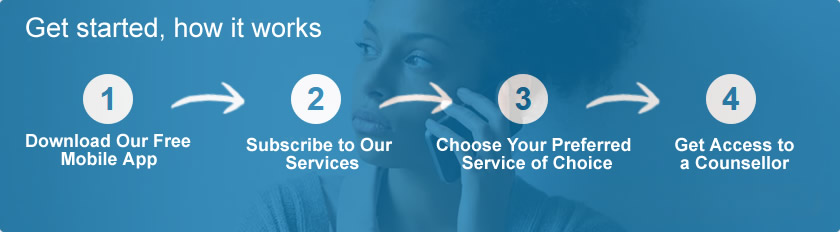
Share with a Counsellor- Skilled counsellors will help you process your feelings, learn to set boundaries, strengthen your problem-solving abilities, and improve communication with your care recipient and other family members. Being proactive about minimizing your burden and learning how to handle stress in a healthy way is crucial for succeeding as a caregiver. Caregivers can receive emotional support from professional therapists, in-person and online support, and one-on-one discussions with friends and family. Share with a Counsellor App allow you to seek supervision, and personal care from a therapist from work, home and any other space, it is your health that matters in delivery of help to others, give it a priority.